Ransomware in 2026: What’s Actually Changed and How Businesses Are Responding
Ransomware didn’t slow down in 2026 — it got a lot faster to pull off. AI has compressed what used to take attackers weeks of reconnaissance into a single business day. Here’s what’s actually changed and what’s actually stopping it.
What’s in this guide
- The numbers: how big the problem actually is now
- What AI actually changed about ransomware
- Who’s getting hit hardest
- What’s actually working as a defense
- FAQ
The Numbers: How Big the Problem Actually Is Now
Ransomware now shows up in roughly 44% of all data breaches, a 12-point jump year-on-year. The average total cost of an incident runs $1.8–5 million, and healthcare organizations specifically lose an average of $1.9 million per day of downtime. Total ransom payments were $813.55 million in the most recent full reporting year — down from $1.25 billion the year before, evidence that more organizations are refusing to pay even as attack volume rises. Two-thirds of attacks between 2024 and 2025 targeted businesses with fewer than 500 employees, and ransomware now makes up 88% of all attacks against small and midsize businesses specifically, versus 39% at large companies.
What AI Actually Changed About Ransomware
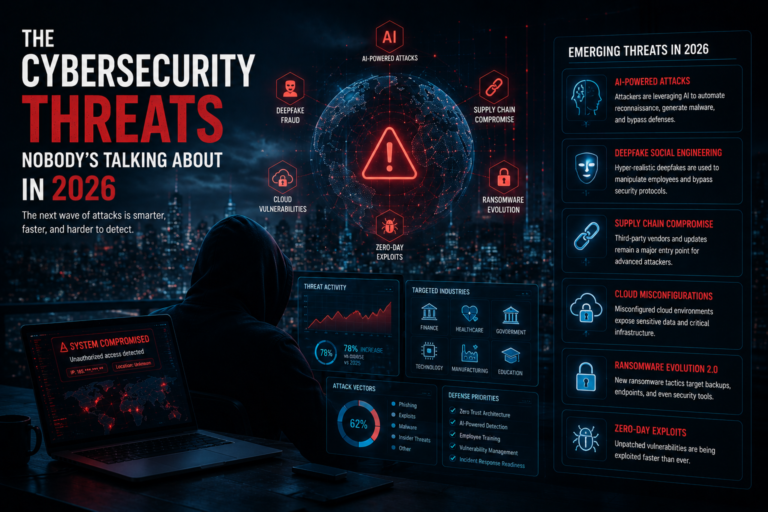
The headline shift in 2026 isn’t a new kind of ransomware — it’s speed. Security researchers now estimate over 80% of social engineering activity is AI-powered, and attackers can compress what used to be weeks of reconnaissance into a single business day: scraping executive voice samples, generating phishing emails in the target’s native language, cloning a voice for a follow-up call, and launching a coordinated attack, all within hours. Two specific tactics stand out: voice cloning that needs only a few seconds of source audio to sound convincing, and deepfake video — in one documented case, a finance employee authorized a $25 million wire transfer after a video call where every other participant, including the “CFO,” was an AI-generated deepfake.
Who’s Getting Hit Hardest
| Sector | 2026 exposure |
|---|---|
| Healthcare | Highest downtime cost — averaging $1.9M/day; 238+ confirmed threats |
| Manufacturing | Most total attacks; over $17B in cumulative downtime costs since 2018 |
| Education | 116+ confirmed attacks, 1.8 million records affected |
| Government | 65% year-on-year increase in incidents against government bodies |
| Financial services | 65% of firms impacted in the most recent full year |
What’s Actually Working as a Defense
Only 41% of middle-market companies’ existing security defenses successfully blocked a ransomware attack outright in the most recent reporting year — meaning most organizations’ real defense is limiting damage and recovering fast, not preventing every attempt. The controls that correlate most with lower losses: multi-factor authentication on all privileged accounts, automated patch management so known vulnerabilities don’t sit open, tested and segmented backups (not just backups that exist but are never restore-tested), AI-based threat detection tuned to catch the same AI-generated lures attackers now use, and mandatory employee training that specifically covers voice-cloning and deepfake scenarios, not just text-based phishing.
Key Takeaways
- Ransomware now appears in 44% of all data breaches, and total ransom payments are falling even as attack volume rises — more victims are refusing to pay.
- AI has compressed attacker reconnaissance from weeks to a single business day, with voice cloning and deepfake video now documented in real, costly incidents.
- Small and midsize businesses bear a disproportionate share of attacks — 88% of SMB breaches involve ransomware, versus 39% at large companies.
- Only 41% of existing defenses fully blocked an attack — resilience (tested backups, fast recovery) matters as much as prevention now.
FAQ
Should we ever pay a ransom?
Security agencies generally advise against it — payment doesn’t guarantee full data recovery, and it funds further attacks. Decision should involve legal counsel, insurers, and law enforcement, not be made unilaterally under pressure.
How do we actually defend against deepfake/voice-clone scams?
Require out-of-band verification for any financial transfer or credential change request — a callback to a known number, not a reply to the same channel — regardless of how convincing the request sounds or looks.
Are small businesses really bigger targets than large enterprises?
By share of total attacks against each group, yes — ransomware makes up a much larger proportion of SMB breaches, largely because smaller companies typically have weaker security budgets and staffing.
Related Reading on FutureLume
- Modern Software Development in 2026: What Actually Changed (and What Didn’t)
- Benefits of Generative AI for Businesses: What’s Real and What’s Hype
- AI Voice Cloning in 2026: Legitimate Uses vs. the Fraud Risk
- AI Deepfake and Phishing Scams in 2026: How Attackers Are Using AI (and What Actually Stops It)
What changed in 2026 isn’t the existence of ransomware — it’s how fast AI lets attackers move from target selection to a convincing, personalized attack. The defenses that actually work haven’t changed much: MFA, tested backups, and verification steps that don’t bend for urgency. What has to change is training people to distrust a convincing voice or face just as much as a suspicious email.