How Hackers Steal Credit Card Information: What’s Actually Happening
Credit card fraud doesn’t usually look like a movie heist.
No one’s cracking a vault. No one’s intercepting an armored truck. Most of the time it’s quieter than that — a piece of malware running silently on a retail system, a convincing fake website, a database breach at a company you forgot you gave your card number to three years ago.
Understanding how it actually works is the first step to not being the person who finds out the hard way.
The Most Common Methods in 2026
Phishing and Fake Websites
This is still the most common entry point. An email that looks like it’s from your bank, your delivery service, or a retailer you use. A link that takes you to a site that looks identical to the real one. You enter your card details. They go directly to whoever built the fake site.
The quality has improved dramatically. AI-generated phishing emails are now contextually specific — they reference real purchases, real account details, real timing. The “this looks slightly off” instinct that used to catch these is less reliable than it was two years ago.
The rule that still works: never click a link in an email to enter payment information. Go directly to the website by typing the address. Every time.
Data Breaches at Companies You Use
You give your card number to a retailer. They store it — sometimes poorly. Someone breaches their database. Your card number is now in a file being sold on a dark web marketplace.
This one isn’t in your control. The breach happens at the company, not at you. What you can control: using virtual card numbers for online purchases (more on this below), monitoring your statements, and using credit rather than debit cards where possible so fraud liability protection is stronger.
The scale of this problem is larger than most people realize. Major data breaches are announced regularly. Smaller ones that never make news happen constantly. Your card information has almost certainly been exposed in a breach you don’t know about.
Card Skimming
A physical device attached to an ATM, gas pump, or payment terminal that reads your card’s magnetic stripe as you swipe it. Sometimes combined with a tiny camera to capture your PIN.
Skimmers are harder to spot than they used to be — they’ve become thinner and better integrated with the machines they’re attached to. The shift to chip cards reduced skimming at point-of-sale terminals significantly, but gas pumps and ATMs lag behind in chip reader adoption and remain common targets.
How to reduce risk: Use chip or contactless payment when available. Cover the keypad when entering your PIN. At ATMs, prefer ones inside bank branches over standalone units. Check for anything that looks loose or out of place on the card reader before inserting.
Malware on Your Device
Software installed on your computer or phone that captures keystrokes, takes screenshots, or monitors clipboard contents. When you type a card number into a payment form, the malware captures it.
This method targets individuals rather than companies. The usual delivery: a malicious email attachment, a fake software download, a compromised browser extension.
How to reduce risk: Keep your operating system and browser updated. Don’t download software from unofficial sources. Be skeptical of browser extensions from developers you don’t recognize.
Man-in-the-Middle Attacks on Public Wi-Fi
On an unsecured public network, someone positioned between you and the network can intercept traffic. If you enter payment information on an unencrypted connection, it can be captured.
HTTPS has made this significantly harder than it was — encrypted connections mean intercepted traffic is mostly unreadable. But the risk isn’t zero, particularly on networks that are entirely controlled by an attacker.
How to reduce risk: Avoid entering payment information on public Wi-Fi. Use a VPN when you need to use public networks regularly. Make sure the site you’re entering payment information on shows HTTPS in the address bar.
Social Engineering and Phone Fraud
Someone calls claiming to be from your bank, your card issuer, or a fraud department. They know some real information about you — enough to seem legitimate. They ask you to confirm your full card number, CVV, or PIN to “verify your identity” or “unblock your account.”
Banks will never ask for your full card number, CVV, or PIN over the phone. If you receive a call like this, hang up and call the number on the back of your card directly.
This method has gotten more sophisticated with voice cloning technology — the caller can sound like a real bank representative. The rule is the same regardless: hang up, call back through the official number.
What Happens After Your Card Is Stolen
Understanding what happens next is useful because it shapes how quickly you need to act.
Stolen card data is typically sold in batches on dark web markets. The price per card varies based on the card’s credit limit, whether the CVV is included, and how recently the data was obtained. Fresh data sells faster and for more.
Buyers use the data quickly — usually within 24 to 72 hours — before the card is likely to be flagged. They often start with small test transactions before making larger purchases. This is why monitoring for small, unfamiliar charges is important — it often precedes larger fraud.
Some stolen cards are used to make purchases that are then resold for cash. Others are used to buy gift cards that are harder to trace. The methods are varied and well-practiced.
How to Actually Protect Yourself
Use Virtual Card Numbers
Most major banks and several third-party services (Privacy.com is the most well-known) allow you to generate virtual card numbers — unique card numbers that are linked to your real account but can be limited to a specific merchant, a spending cap, or a single use.
If that virtual number is stolen, canceling it doesn’t affect your real card. This is the most practical protection against breach-related fraud for online purchases.
Use Credit, Not Debit
Credit card fraud liability is generally capped at $50 by federal law, and most major issuers offer zero-liability policies. Debit card fraud protections are weaker — if you report it late, your liability can be significant.
For online purchases and any situation where you’re not certain about the merchant, credit is safer than debit.
Monitor Your Statements
Not at the end of the month. Regularly. Setting up transaction alerts — a notification every time your card is used — is the fastest way to catch unauthorized activity before it escalates.
Enable Two-Factor Authentication on Financial Accounts
Your card number is one layer. If your online banking account is compromised, someone can change your contact information and redirect fraud alerts away from you. Two-factor authentication on your bank account is an additional layer that matters.
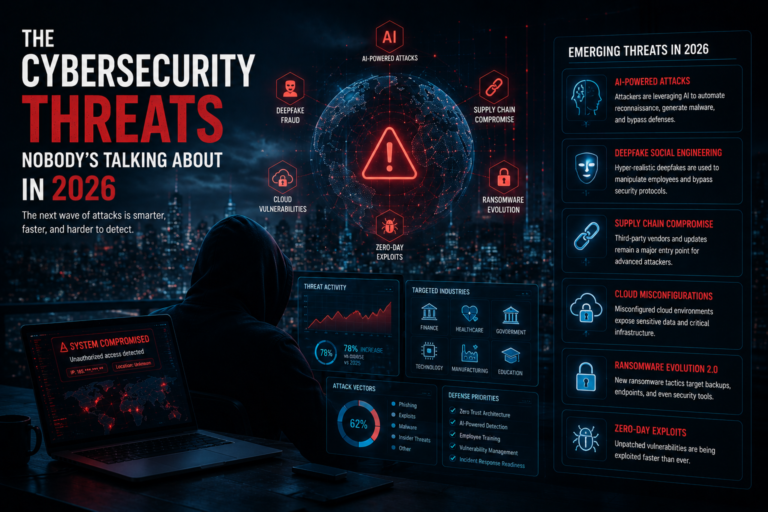
The cybersecurity threats worth knowing about in 2026 go beyond card fraud — but the personal finance layer is where most people feel the impact most directly.
Credit card fraud is a volume game on the attacker’s side. They’re not targeting you specifically — they’re running operations that expose millions of card numbers and convert a percentage of them before they’re flagged.
The defenses aren’t complicated. Virtual card numbers for online purchases. Credit over debit. Transaction alerts. Skepticism about any inbound communication asking for card information.
None of this eliminates the risk entirely. All of it reduces it significantly.