Best AI Agent Orchestration Platforms in 2026: Who’s Actually Coordinating Multi-Agent Workflows
Getting one agent to answer a support ticket is a solved problem. Getting a dozen specialized agents to hand off work, share memory, and not step on each other is the actual 2026 challenge — here’s who’s building the orchestration layer and how the architecture actually works.
What’s in this guide
- Why single agents stopped being enough
- The orchestration pattern everyone converged on
- Who’s actually building this: platforms compared
- The interoperability push: A2A and agentic payments
- Where multi-agent systems still break
- FAQ
Why Single Agents Stopped Being Enough
Through most of 2025, “AI agent” meant one model wired to one task — a chatbot that answered tickets, a scraper that filled out forms. That pattern hit a ceiling fast: a single agent juggling research, drafting, verification, and execution in one context window gets slower, less reliable, and harder to debug as the task grows. 2026 is the year that pattern got replaced. Instead of one generalist agent, teams are shipping systems of narrow specialist agents coordinated by a router — and treating orchestration, not the underlying model, as the hard engineering problem.
The Orchestration Pattern Everyone Converged On
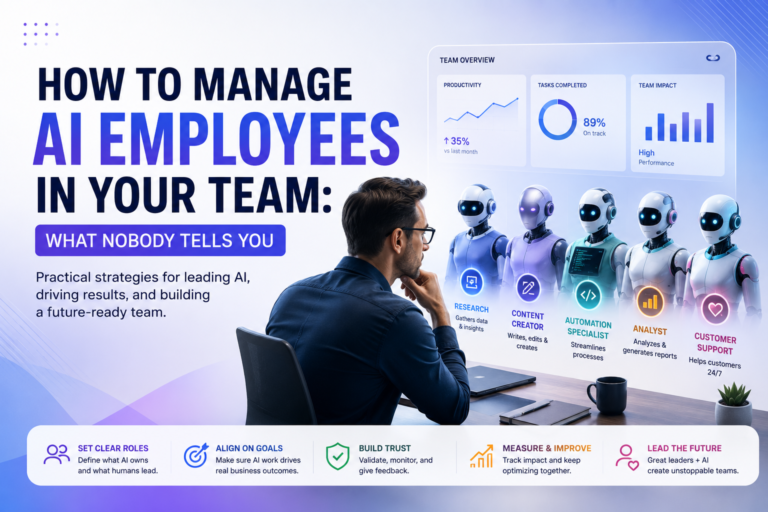
Despite different vendors and frameworks, the architecture that’s emerged looks remarkably similar everywhere: a coordinator (or “router”) agent that reads a request and decides which specialist should handle it, a set of narrow specialist agents that each do one thing well, a shared memory or state layer so agents aren’t working from stale context, and a guardrail layer that enforces permissions and writes an audit log of every action taken.
Who’s Actually Building This: Platforms Compared
| Platform | Type | What it’s for |
|---|---|---|
| Salesforce Agentforce | Enterprise product | Router agents dispatching to CRM-connected specialist agents out of the box |
| Microsoft AutoGen | Open framework | Code-first multi-agent cooperation patterns for developers |
| LangChain / LangGraph | Open framework | Standardized graph-based agent orchestration with growing enterprise tooling |
| Anthropic’s multi-agent research pattern | Published architecture | Lead-researcher-plus-subagents pattern for parallelized research tasks |
| Google Agent2Agent (A2A) | Interoperability protocol | Letting agents built on different stacks discover and talk to each other |
Most production deployments in 2026 combine two or more of these — a framework for building specialist agents, plus a protocol so they can be discovered across teams or companies.
The Interoperability Push: A2A and Agentic Payments
The newest layer of the stack isn’t about building agents — it’s about letting agents from different companies work together safely. Google’s Agent2Agent protocol gives agents on different platforms a common way to discover and delegate to each other. On the commerce side, Visa’s Intelligent Commerce and Trusted Agent Protocol let agents hold tokenized payment credentials and prove they’re legitimate rather than malicious bots, and Mastercard is building comparable standards. The World Economic Forum has pushed a parallel idea called “Know Your Agent” — treating autonomous agents as economic participants that need verifiable identities, the same way KYC treats human customers.
Where Multi-Agent Systems Still Break
- Runaway cost: parallel agents multiply token spend fast if there’s no budget cap on how many sub-agents a task can spawn.
- Coordination deadlock: two agents waiting on each other’s output with no timeout is a real, recurring failure mode in early deployments.
- Audit gaps: teams that skip the guardrail/logging layer to ship faster end up with no way to explain why an agent did something after the fact.
- Cross-vendor trust: A2A and similar protocols solve discovery, not liability — who’s responsible when another company’s agent gives yours bad data is still mostly unresolved.
Key Takeaways
- The single generalist agent is being replaced by coordinator-plus-specialist systems with shared memory and permission guardrails.
- Salesforce Agentforce, Microsoft AutoGen, and LangGraph represent three different entry points — packaged product, code framework, and graph-based orchestration.
- Google’s A2A protocol and Visa/Mastercard’s agentic-commerce standards are the interoperability layer making cross-vendor agent coordination possible.
- Cost control and audit logging aren’t optional extras — they’re the two guardrails that separate a reliable multi-agent system from an expensive, undebuggable one.
FAQ
Do I actually need multiple agents, or is one enough?
If the task is narrow and repeatable, one well-tuned agent is still simpler and cheaper. Multi-agent orchestration earns its complexity when a workflow spans genuinely different skills — research, drafting, verification, execution — that benefit from separate context and separate guardrails.
Is there an industry-standard protocol yet?
Google’s A2A is the furthest along for general agent-to-agent interoperability, and Visa/Mastercard’s frameworks are the closest thing to a standard for agentic payments specifically. Neither is universally adopted yet.
What’s the single biggest mistake teams make?
Skipping the permissions and audit-log layer to ship faster. It’s the first thing that’s missing when a multi-agent system does something unexpected and nobody can explain why.
Related Reading on FutureLume
- Multi-Agent AI Systems in 2026: The New Enterprise Operating System
- What AI Agent Platforms Are Best for Startups in 2026?
- AI Agent Development Company Red Flags: What to Watch For Before You Sign
- AI Agent Development Services: The Complete Guide for 2026
Multi-agent orchestration moved from research demo to production pattern in 2026, and the winners aren’t the teams with the fanciest model — they’re the ones who treated coordination, memory, and guardrails as first-class engineering problems from day one. Pick a framework that matches your team’s skill level, budget for the cost multiplier of parallel agents, and don’t skip the audit log.