

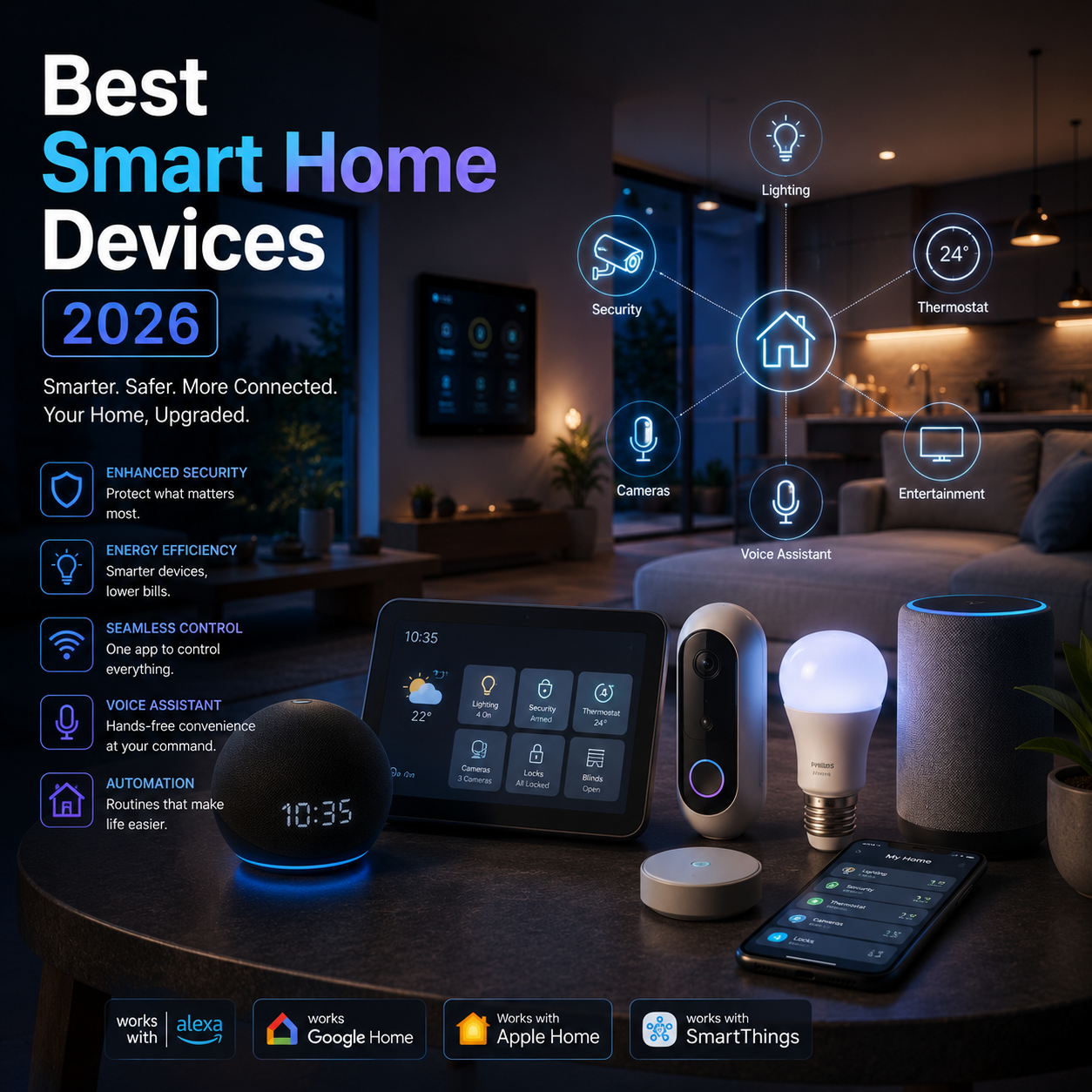
Smart home devices have been “the future” for about fifteen years.
Most of that time they were frustrating. Things that didn’t talk to each other. Apps that required a PhD to configure. Voice assistants that understood “play jazz” as “call Dave.” The promise was always bigger than the reality.
2026 is different. Not because the marketing got better — because the integration actually works now. Matter, the universal smart home standard, has matured enough that devices from different manufacturers actually work together. AI has made the automation smarter. And the devices themselves have gotten simpler to set up.
Here’s what’s actually worth buying — and what’s still more trouble than it’s worth.
Smart Speakers and Displays
Amazon Echo Show 15 (2nd Gen)
The best smart display available right now for most homes.
The screen size makes it genuinely useful as a kitchen hub — recipes, timers, video calls, calendar at a glance. The AI assistant has improved significantly. It actually understands context now rather than treating every command as an isolated query.
The Alexa ecosystem is still the most mature in terms of device compatibility. If you’re building a smart home from scratch, starting here gives you the widest integration options.
Worth it if: You want a central hub with a screen. You cook at home regularly. You have or plan to have other Alexa devices.
Skip it if: You’re deep in the Google ecosystem or already have a working hub setup.
Google Nest Hub Max
The better choice if you’re already in the Google ecosystem.
Google’s integration with Calendar, Gmail, and Photos is tighter than Amazon’s equivalent. The camera-based sleep tracking is genuinely useful. And Google Assistant has gotten better at multi-step requests.
The device ecosystem isn’t quite as broad as Alexa’s but it’s close enough that it rarely matters in practice.
Worth it if: You use Google services daily. You want sleep tracking without a wearable.
Smart Lighting
Philips Hue Starter Kit
Still the benchmark for smart lighting. The reliability is what sets it apart — Hue lights just work, consistently, without the connectivity drops that plague cheaper alternatives.
The app has improved. The Matter support means they integrate cleanly with any major ecosystem. The color accuracy on the color bulbs is genuinely impressive if you care about that.
The price is high. That’s the real barrier. A full home setup costs significantly more than alternatives. But the alternatives have a reliability tax that adds up in frustration over time.
Worth it if: You want lighting that works reliably and you’re willing to pay for it.
Skip it if: You’re equipping a rental or want to test smart lighting cheaply first — try Govee or LIFX at lower price points.
Govee Smart Bulbs
The budget alternative that’s gotten good enough to recommend.
Not Hue-level reliability. Not Hue-level color accuracy. But significantly cheaper and good enough for most rooms where you just want on/off and dimming from your phone or a schedule.
Matter support is improving. Setup is straightforward. For bedrooms, guest rooms, or anywhere you’re not trying to impress anyone — Govee works.
Smart Security
Arlo Pro 5S
The best outdoor security camera for most homes in 2026.
The image quality is excellent. The AI-powered detection — distinguishing people from animals from cars — has gotten accurate enough to actually reduce false alerts to a manageable level. Local storage option means your footage doesn’t have to live on someone else’s server if you don’t want it to.
Battery life is strong. Weather resistance is solid. The app is one of the better ones in the category.
Worth it if: You want reliable outdoor security without constant false alerts.
Skip it if: You’re already invested in the Ring or Nest ecosystem — switching costs are real.
Ring Video Doorbell Pro 2
The default recommendation for video doorbells — and for good reason.
The installation is straightforward for most homes. The integration with Alexa devices means you can see who’s at the door from any Echo display. The motion detection has improved and the bird’s eye view feature is genuinely useful for seeing package placement.
Amazon’s ownership of Ring is worth knowing about from a privacy standpoint. If that’s a concern, look at the Eufy Video Doorbell as an alternative with local storage.
Smart Thermostats
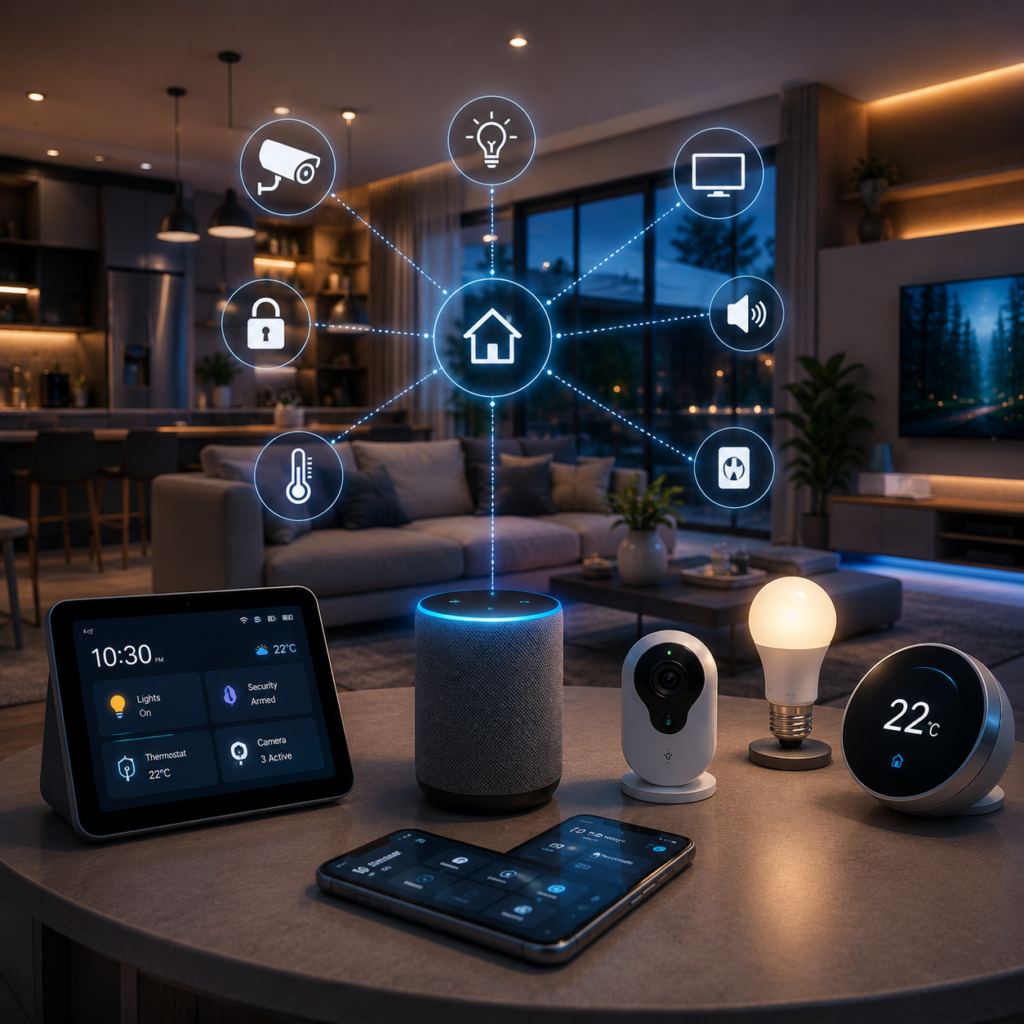
Google Nest Learning Thermostat (4th Gen)
The smart thermostat category has a clear winner and it’s been the Nest for years.
The learning algorithm works — it actually adapts to your schedule rather than requiring you to program it manually. The energy savings are real and measurable. The integration with Google Home and Alexa both work well.
The 4th gen added Matter support and a cleaner interface. If you don’t have a smart thermostat yet, this is the one.
Worth it if: You have a compatible HVAC system and want genuine energy savings on autopilot.
Skip it if: You rent and can’t install it, or your HVAC system isn’t compatible (check before buying).
Ecobee SmartThermostat Premium
The better choice if you want room sensors and more granular control.
The included room sensor addresses the fundamental problem with single-point thermostats — the hallway isn’t the whole house. If you have rooms that run hot or cold, the Ecobee approach works better than the Nest.
The app gives you more detailed data and more control. For people who want to optimize rather than set-and-forget, Ecobee is the better fit.
What’s Still Not Worth It
Smart refrigerators. The screen on the door doesn’t justify the premium. The integration is limited. The feature that shows you what’s inside your fridge from the grocery store sounds useful until you realize you never actually use it.
Smart mirrors. Still a solution looking for a problem for most people.
Robot vacuums under $200. The cheap ones create more frustration than they save. Either spend $400+ on a Roborock or Roomba j series, or use a regular vacuum. The middle ground is disappointing.
Any smart home hub from a brand you’ve never heard of. The compatibility promises rarely hold up. The app support disappears. The devices become expensive paperweights when the company pivots or shuts down.
The Setup Advice Nobody Gives You
Start with one room. Not the whole house.
Pick the room where automation would actually make your life easier — usually the living room or bedroom. Get that working reliably before expanding. The temptation to buy everything at once leads to a half-configured mess that’s harder to troubleshoot than a planned rollout.
Stick to one ecosystem where possible. Alexa, Google Home, or Apple HomeKit. Mixing them works better than it used to thanks to Matter, but it’s still more friction than necessary.
And automate things you actually do repeatedly. Turning on the living room lights at sunset. Adjusting the thermostat when you leave. Locking the door at midnight. The automations that save real time are the boring ones, not the impressive ones.
The AI automation thinking that applies to business processes applies here too — automate the high-frequency repetitive things first, not the impressive-sounding things.
Quick Reference
| Device | Best For | Skip If |
|---|---|---|
| Echo Show 15 | Kitchen hub, Alexa ecosystem | Deep in Google ecosystem |
| Nest Hub Max | Google users, sleep tracking | You prefer Alexa |
| Philips Hue | Reliable lighting, full home | Budget is the priority |
| Govee Bulbs | Budget lighting, testing | You want reliability |
| Arlo Pro 5S | Outdoor security | Already on Ring/Nest |
| Ring Doorbell Pro 2 | Video doorbell default | Privacy concerns |
| Nest Thermostat | Set-and-forget energy savings | Renters, incompatible HVAC |
| Ecobee Premium | Room-level temperature control | Simple setup preference |
Smart home devices in 2026 are genuinely better than they were three years ago. The integration works. The AI has improved. The setup is less painful.
But the best smart home is still the one you’ll actually use. Start small, automate the boring things, and expand when you’re confident it’s adding value.
Don’t buy the smart refrigerator.